The Science Behind Bamboo’s Strength and Flexibility: Nature’s Engineering Marvel, Perfected by Veri
Bamboo has long been revered in traditional construction, but it’s often misunderstood in the modern context. Many still perceive it as a “grass”—implying fragility—rather than recognizing it as one of nature’s most sophisticated structural materials. At Veribambu™, we don’t just use bamboo; we engineer it to amplify its innate properties, creating products that outperform traditional timber and even many synthetic composites.
But what exactly gives bamboo its extraordinary combination of strength and flexibility? The answer lies in a remarkable convergence of natural evolution and materials science. This article delves deep into the structural biology of bamboo and reveals how Veribambu™’s advanced processing transforms this natural wonder into a building material for the future.
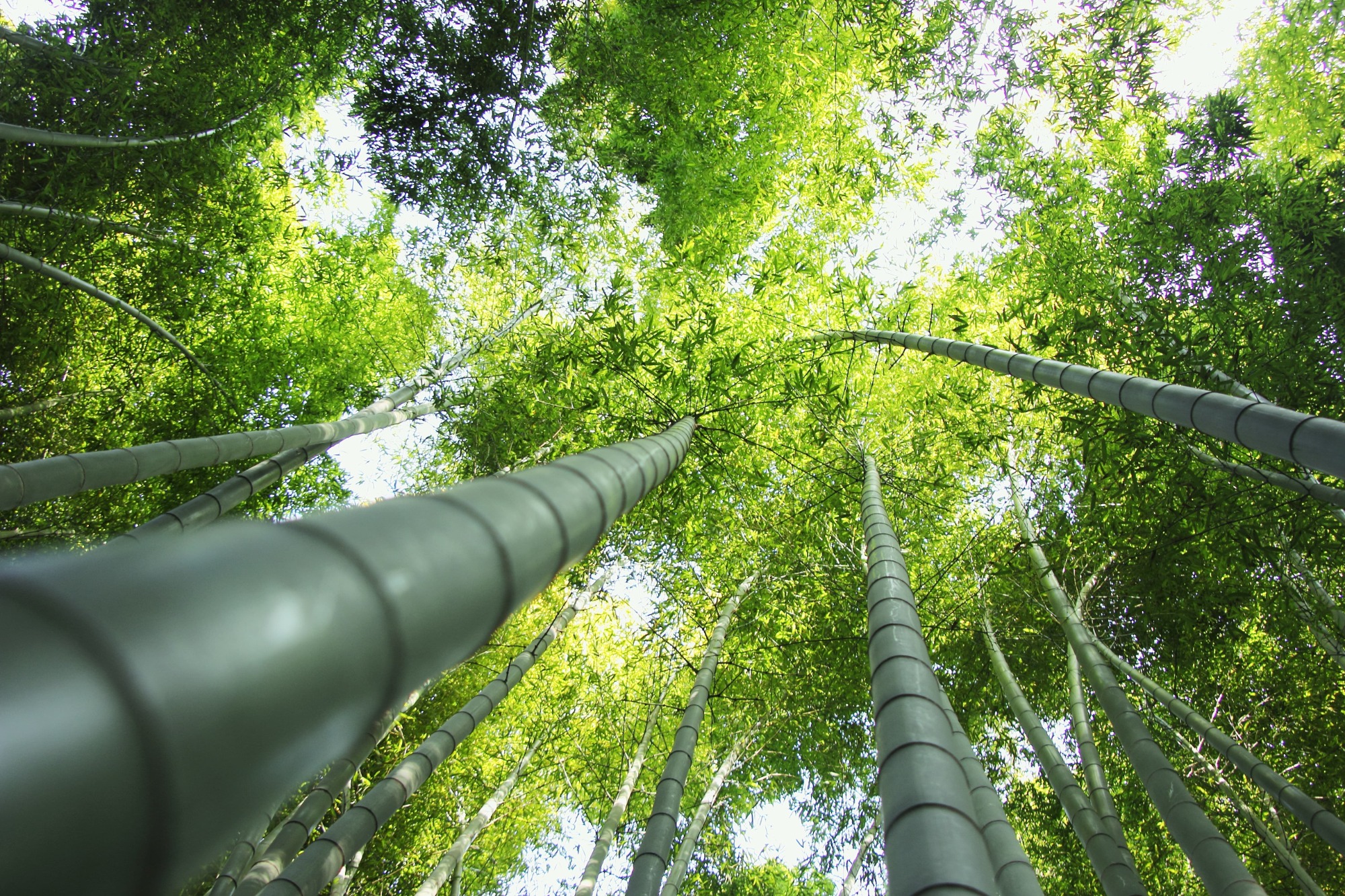
The Microanatomy of a Powerhouse
Unlike isotropic materials like steel or concrete, bamboo is an anisotropic material, meaning its properties vary depending on the direction of the force applied. This complex structure is the source of its unique capabilities.
1. The Fiber Composite Structure
At a microscopic level, bamboo is a naturally occurring solid material. It consists of:
- Strong Fibers: Vascular bundles, which are dense concentrations of long, aligned cellulose fibers, act as the primary reinforcement, much like the rebar in concrete or the fibers in fiberglass. These fibers have a tensile strength that can exceed that of steel on a weight-for-weight basis.
- Flexible Matrix: A lignin and hemicellulose matrix surrounds these fibers, binding them together. This matrix is more flexible, allowing it to absorb and distribute energy.
This combination is the fundamental secret to bamboo’s success: the strong fibers resist breaking under tension, while the softer matrix allows for bending and energy dissipation.
2. The Nodal Design
The nodes—the solid rings along the length of the bamboo culm—are not imperfections. They are crucial engineering features. These nodes:
- Act as Stiffeners: They compartmentalize the hollow internodes, preventing catastrophic splitting and buckling under compressive loads.
- Redistribute Stress: They efficiently transfer and redistribute stresses throughout the structure, much like the ribs in an airplane wing.
3. The Hollow Cylinder Form
The hollow, cylindrical shape of the raw bamboo culm is a masterpiece of biomechanical efficiency. This shape provides:
- Maximum Stiffness with Minimal Weight: This form offers an exceptional strength-to-weight ratio and high resistance to bending and torsion, using a minimal amount of material. It’s a design principle engineers mimic in everything from bicycle frames to aircraft wings.
From Natural Wonder to Engineered Super-Material: The Veribambu™ Process
While raw bamboo is impressive, it has limitations: variable diameter, susceptibility to moisture, and size constraints. Veribambu™’s manufacturing process is designed to overcome these limitations while preserving and enhancing bamboo’s innate strengths.
1. Strand Woven Bamboo: The Pinnacle of Performance
Our flagship technology involves deconstructing and reassembling the bamboo to create a homogeneous, ultra-dense material. The process:
- Crushing: Bamboo culms are crushed into a mat of individual fibers.
- Impregnation: Fibers are treated with a non-toxic, water-based resin for moisture and pest resistance.
- Alignment and Pressing: The fibers are aligned in specific orientations and subjected to extreme heat and pressure (over 2,000 psi).
The Scientific Outcome: This process creates a monolithic material where the strong cellulose fibers are uniformly distributed throughout the lignin matrix. The random imperfections found in natural bamboo are eliminated, resulting in a product with:
- Unidirectional Strength: All fibers are aligned to maximize strength in the desired direction.
- Exceptional Hardness: Veribambu™ strand woven bamboo achieves a Janka Hardness rating of over 3,000 lbf, surpassing red oak (~1,290 lbf) and maple (~1,450 lbf).
- Superior Dimensional Stability: The process and resins make the material highly resistant to swelling, shrinking, and warping due to changes in humidity and temperature.
2. Cross-Ply Lamination: Mastering Stability
For applications requiring maximum stability, we create cross-ply panels. Layers of bamboo with grains oriented perpendicular to each other are laminated together. This technique:
- Neutralizes Internal Stresses: Counteracts the natural tendency of wood products to warp.
- Creates an Isotropic Panel: The panel behaves consistently in all directions, making it ideal for large-format surfaces like tabletops and cabinet doors.
Quantifying the Advantage: Bamboo vs. Traditional Materials
Let’s put this performance into perspective with a comparative analysis:
|
Property |
Veribambu™ Strand Woven Bamboo |
Mild Steel |
Concrete |
Red Oak |
|
Tensile Strength (MPa) |
~350 |
~400 |
~2-5 |
~100 |
|
Specific Strength (Strength/Density) |
Very High |
High |
Low |
Medium |
|
Janka Hardness (lbf) |
>3,000 |
N/A |
N/A |
~1,290 |
Table: A comparative analysis of mechanical properties. Specific strength is a key metric for evaluating efficiency in structural design.
The data shows that while steel has a higher absolute tensile strength, Veribambu™ Bamboo has a phenomenal specific strength. This means it provides a comparable load-bearing capacity at a fraction of the weight, offering massive efficiency gains in design and transportation.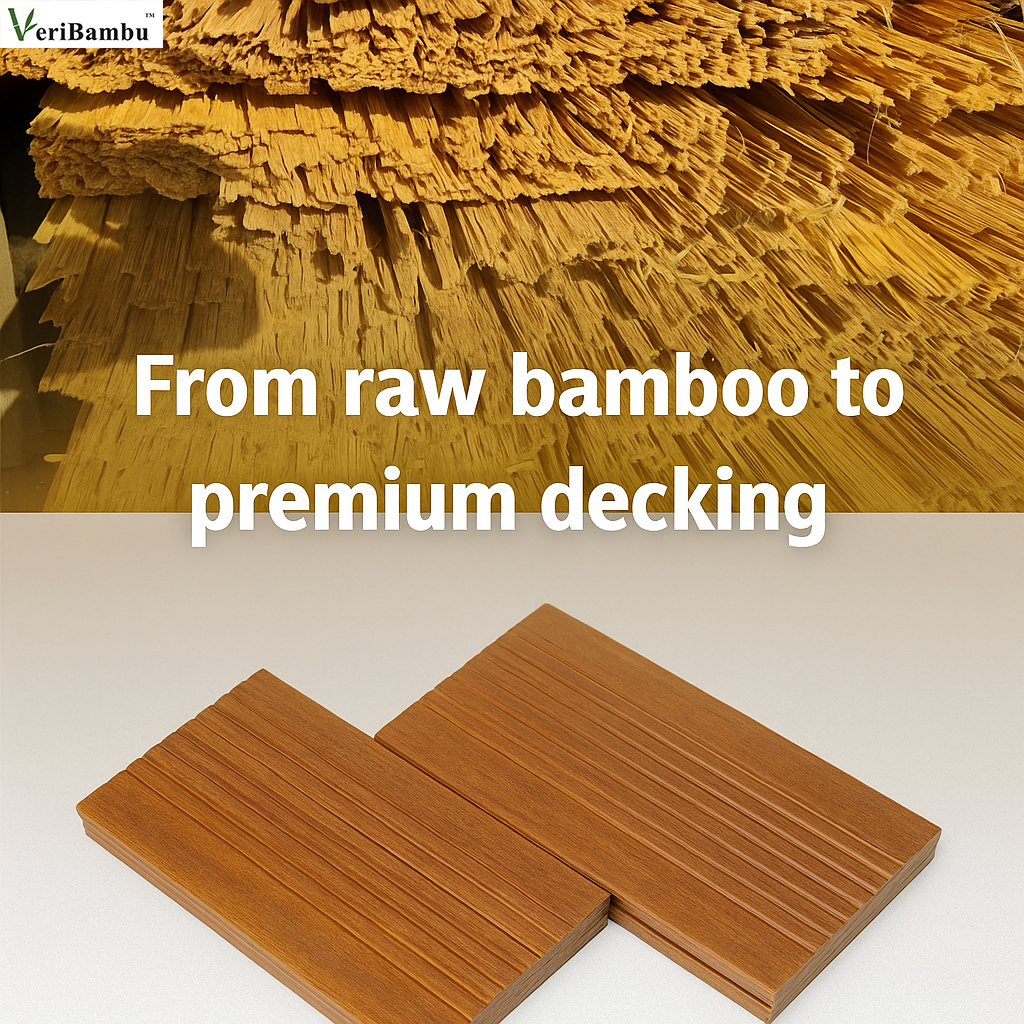
Real-World Applications: Harnessing Science for Design
This deep understanding of material science informs our product range and its ideal applications:
- Structural Members (Beams, Posts): We utilize the innate flexural strength and hollow-cylinder principle, engineering laminated beams that provide long spans and high load-bearing capacity for pavilions, homes, and commercial structures.
- High-Traffic Flooring & Decking: The extreme surface hardness and wear resistance of our strand-woven products make them perfect for areas where both beauty and durability are non-negotiable.
- Furniture & Cabinetry: The dimensional stability of our cross-ply panels ensures that doors and tabletops remain flat and true for decades, even in variable climates.
- Curved Architectural Elements: We harness the natural flexibility of thin bamboo layers to create stunning curved walls, ceilings, and cladding, a feat difficult to achieve with traditional timber.
Conclusion: Building on a Foundation of Science
Bamboo’s strength and flexibility are not mystical qualities; they are the result of millions of years of natural engineering evolution. At Veribambu™, we begin where nature left off. Through advanced materials science and manufacturing processes, we transform this remarkable grass into a consistent, reliable, and superior building material.
Choosing Veribambu™ is not just an aesthetic or ecological decision; it is a technical one. It is the choice for a material whose performance is rooted in the intricate beauty of plant biology and perfected through human innovation.
Ready to specify with confidence? Download our technical data sheets to see the hard numbers behind our performance claims, or contact our team to discuss how Veribambu™ can bring strength, flexibility, and sustainability to your next project.